

Table of Contents
ToggleIntroduction
BLE Audio was first announced back in 2020, so in theory is a mature technology, some 5+ years old. In reality of course, it takes significant time for a technology to go from being “announced” to being widely adopted in commercially available devices. Indeed the specifications were only finalized in 2022, although this didn’t stop manufacturers working on devices.
With this kind of technology, there are multiple stages of development; first core hardware – chips, transceivers – has to be developed to support the new standard, then software to implement the new protocols, and finally OEM devices designed and built that incorporate these devices into interesting products.
In summary, it is only quite recently that the technology could be considered widespread in the market.
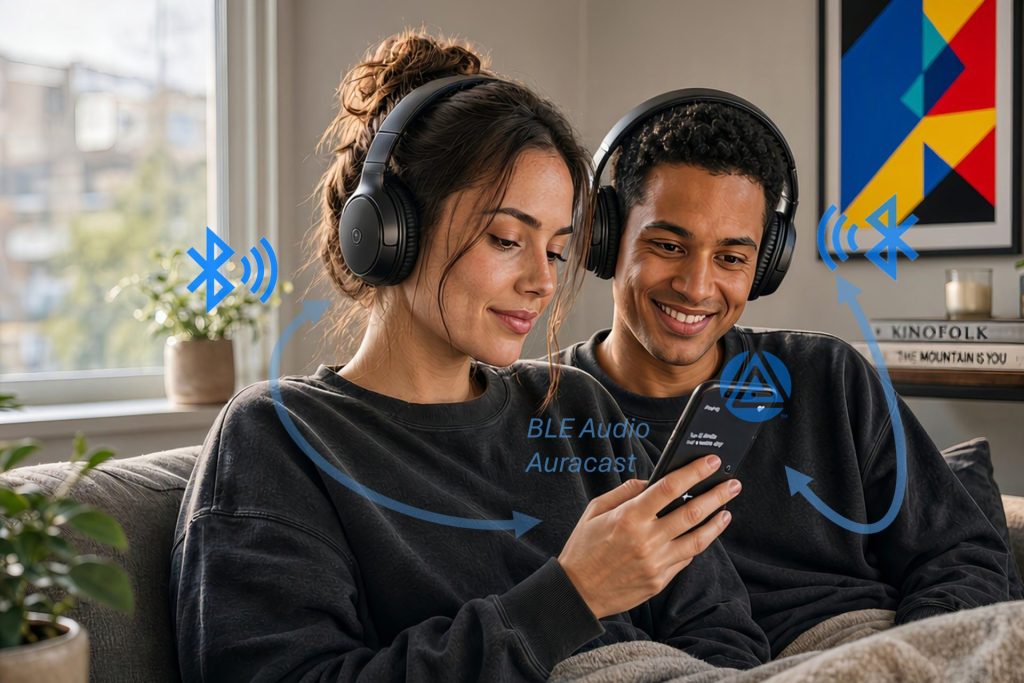
BLE Audio Basics
Prior to the release of BLE Audio, Bluetooth Low Energy was limited to IOT type applications with limited data rate capability and no demanding need for low latency or streaming capability. Audio could be supported by “Bluetooth Classic” using some higher data rate modes, although even there, significant work was required to squeeze in the requirements of even a simple requirement such as stereo audio streaming. Native support in Bluetooth was limited.
BLE Audio had two core objectives; firstly to provide better native support for audio streaming (and thus enable additional advanced features), and to take advantage of BLE’s low power capability to enhance battery life of audio devices such as headphones or earbuds.
Since the maximum data rate of BLE (2Mb/s) wasn’t increased, some clever thinking was required. Firstly, native support for streaming technology was introduced into the core Bluetooth specification (technical name: Isochronous Channels), in order to make streaming more efficient. More importantly, a new CODEC was developed (LC3), that provided a high level of compression with a low perceived loss of audio quality. This allowed a good quality audio experience to be achieved within the data limit of BLE.
For more detailed coverage of BLE Audio, see BLE Audio and its place in the evolution of Bluetooth
Multi-Stream Audio and Auracast
These are two features that enhanced the native capabiltity of audio under BLE. Multi-Stream is the native support of two different but synchronized audio streams; the most obvious application of this is stereo audio, or more sophisticated audio solutions such as Dolby 5.1.
Auracast is a technology that allows “broadcast” of audio to multiple devices. Such audio streams can be either open, meaning anyone can “tune in” to a stream without any connection or security process, or alternatively closed, where only authorized users can participate.
Open streams could be used in lecture theatres, where there could be streams in multiple languages available, or to allow users to pick up sound from a public television without disturbing those who didn’t want to hear it.
BLE Audio – Current state of devices and applications
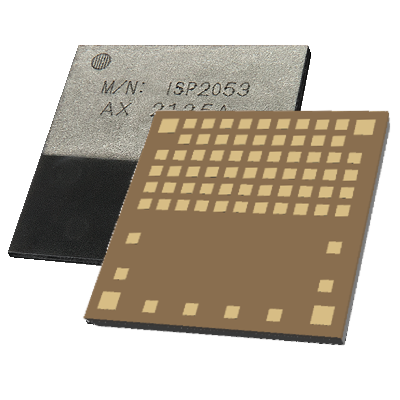
BLE audio is now well established. There are BLE chips that support it, such as the Nordic nRF5340 and fully integrated modules, such as Insight SIP’s ISP2053-AX. Many OEM devices are now available in the market, although for now, most have to offer support Bluetooth Classic as well in order to remain compatible with older devices.
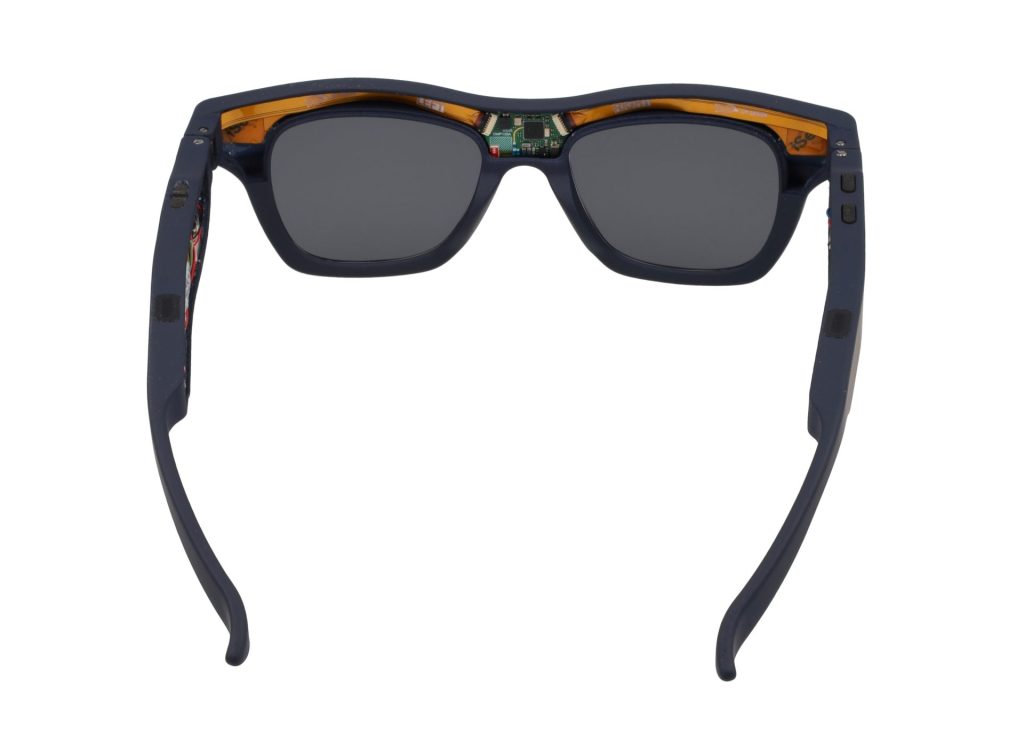
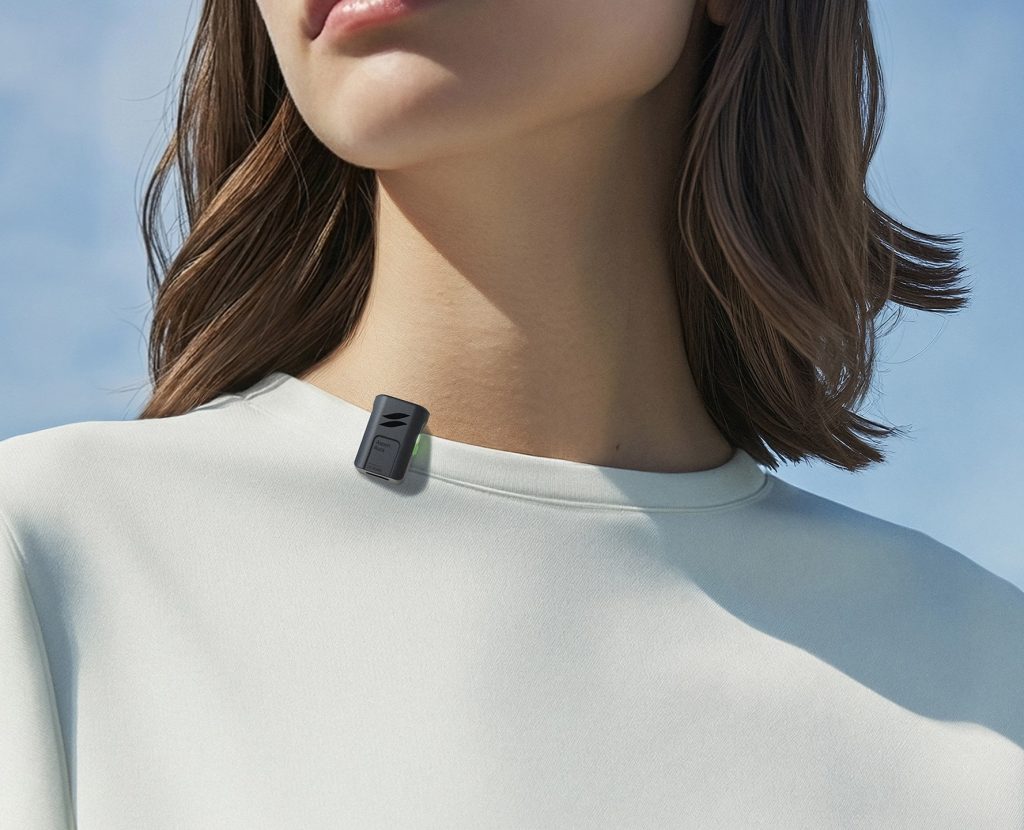
There are also some devices that are entirely based on BLE Audio. Any application taking advantage of Auracast will be BLE audio based, as such capability isn’t supported in the older standard. One such example is discussed in the following case study
There are some 200+ devices listed on the Bluetooth SIG website that offer Auracast, and this is almost certainly not a complete list of every device in the market.
A further BLE audio application is described here
If you just prefer to see (or rather listen to) BLE audio in action, then Insight SIP has its BLE Audio Demo Boards availble here:
Limitations of BLE Audio, Bluetooth 7.0 Higher Data Rate (HDT) and the future
BLE audio provides a good solution for many application requirements. The LC3 CODEC provides a good listening experience with a low level of perceived audio quality loss. For many situations where people stream audio – say whilst running or working out in the gym, or listening to music in relatively noisy environments, this is perfectably acceptable.
Nevertheless, this CODEC, alongside any previous BT CODECs, do degrade audio quality. For a true audiophile experience, a lossless audio transmission is desirable. This is never going to be possible under the limitation of a 2 Mb/s data rate.
Enter Bluetooth 7.0, with the Higher Data Throughput (HDT) capability. An in-depth analysis of BT HDT really needs a separate paper, but in simple terms, it offers an enhanced data rate of up to 7.5 Mb/s, or nearly 4x the rate BLE supports today. This does offer the potential of full lossless audio via BLE. It achieves this via using more sophisticated physical layer (PHY) encoding schemes (adopting some techniques currently used in Wi-Fi). There is likely to be a cost in terms of range and/or power consumption (as there’s no free lunch), but often audio transmission is over short distances so this may be acceptable.
So when can we expect to enjoy full Hi-Fi CD quality audio via Bluetooth? Not for a while, unfortunately. Firstly, the spec was only released last week (Nov 26), so although manufacturers are already working on it, no devices are available today at the chip level. Secondly, you still need a CODEC (even for lossless transmission), and no such CODEC exists. The Bluetooth SIG has announced various projects related to audio, including high resolution and lossless audio hopefully to be released in 2027. Other projects include Spatial Audio and Surround Sound.
Even once the basics are in place – devices, specs, software – we will still need OEM manufacturers to produce products. So based on previous experience, we are some years away from this becoming widespread.
Nevertheless, we can see a roadmap whereby even the most demanding audio applications could be delivered wirelessly.
