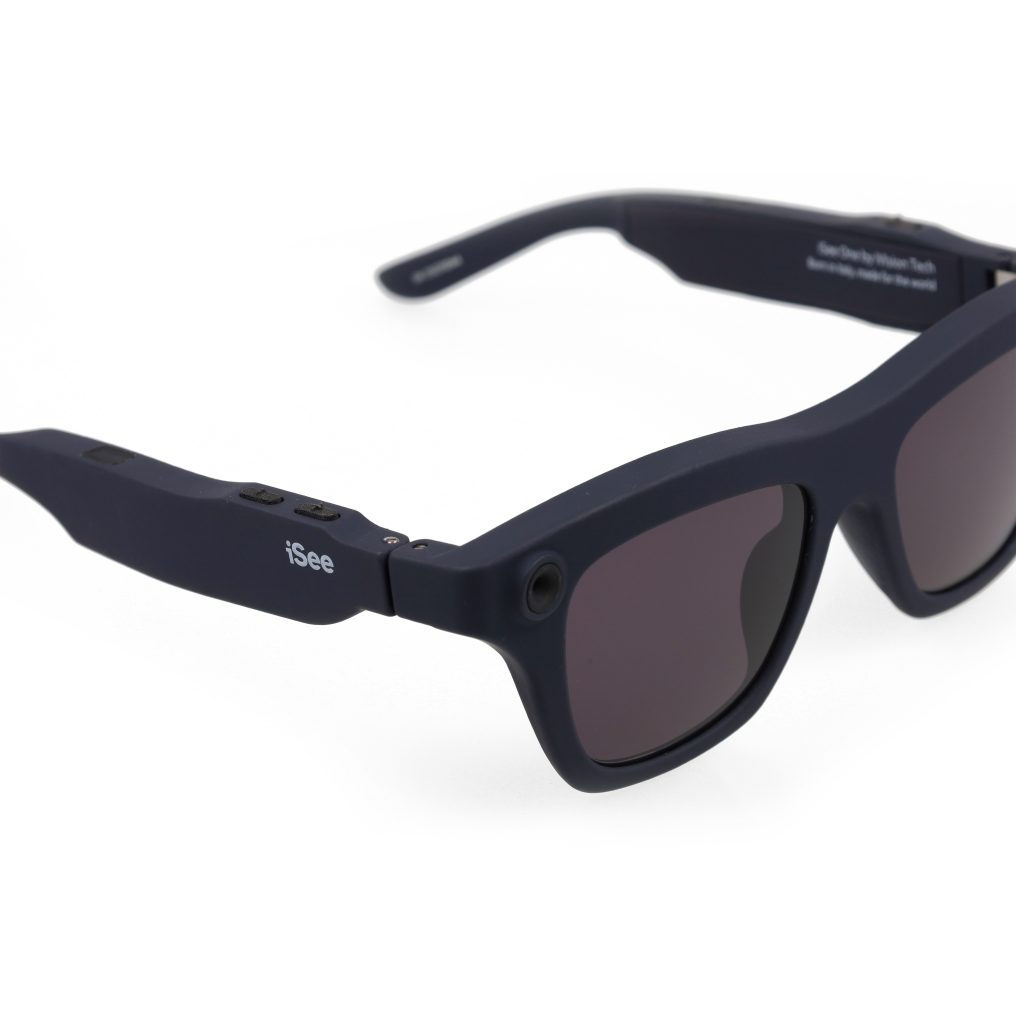

The iSee project was created as a social initiative to use technology to aid blind people with mobility outside. To date, technology, when it has been used at all, is deployed mainly to assist the visual disabled indoors. By contrast, for outdoor environments, there has been limited progress, with most sight impaired people relying on traditional options such as guide dogs, white canes and Braille signage.
The iSee glasses solution, which has been developed in conjunction with visually disabled users, uses state of the art technology to complement the current aids available. The iSee glasses uses ultrasonic sensors to detect obstacles at a distance of up to 4m away. By combining data from these sensors on each side of the glasses, both the distance and direction of any obstacle can be detected. AI processing is used to filter the most important information so the users are not overwhelmed with data.
Feedback provided via audio, which can be in the form of vocal or acoustic alerts, according to the preference of the user. The audio is delivered by open-type MEMS speakers, which provide clear output but without blocking out other sounds from the environment, which is clearly critical for a visually impaired person.